Si aún usas el sistema de descuentos predeterminado de Shopify, es posible que veas cómo tus márgenes se reducen a medida que tus competidores implementan estrategias de descuento más inteligentes y personalizadas. La diferencia entre el descuento predeterminado y el inteligente de Shopify no es solo técnica; se trata de cómo tratas a los diferentes clientes. Los descuentos predeterminados aplican la misma oferta a todos, mientras que los descuentos inteligentes te permiten dirigirte a clientes VIP, compradores recurrentes o incluso nuevos según su comportamiento.
Esto es lo que muestran los datos: las tiendas con mejor rendimiento logran 37% tasas de conversión más altas Al activar la personalización según el comportamiento en tiempo real, como el abandono del carrito o los patrones de navegación, en lugar de basarse en perfiles estáticos de clientes. Ese es el poder del contexto sobre las suposiciones.
Al principio, los descuentos predeterminados pueden funcionar. Pero a medida que tu negocio crece, necesitas un enfoque más estratégico. Los comerciantes que adoptaron descuentos personalizados obtuvieron mayores ganancias y una interacción más significativa. No se trata de abandonar los descuentos, sino de usarlos de forma que impulsen el crecimiento de tu negocio y protejan tus márgenes. Aprendamos cómo hacerlo en 2026.
Los descuentos predeterminados son el sistema de descuentos integrado en cada tienda Shopify. Puedes crearlos en tu panel de administración, en "Descuentos". No necesitas ninguna aplicación ni configuración compleja.
Existen cuatro tipos principales: descuento porcentual (10%, 15%, 20%), descuento fijo ($5, $10), envío gratuito y ofertas de dos por uno. Puedes aplicarlas a todo el sitio web, a colecciones específicas o a productos individuales. Puedes establecer condiciones básicas como compras mínimas o cantidades mínimas.
Para muchos comerciantes, especialmente para los que empiezan, esto funciona bien. ¿Quieres ofrecer un descuento de 10% a quienes compran por primera vez? Crea un código, compártelo en tu correo de bienvenida y listo. ¿Tienes una venta flash este fin de semana? Configura un descuento automático de 15%, prográmalo y sigue adelante.
Los descuentos predeterminados tenían sentido cuando las tiendas de Shopify eran más sencillas. Cuando la mayoría de los comerciantes tenían un solo tipo de cliente, una sola estrategia de precios y no competían con docenas de otras tiendas en su nicho. En 2015, un código de descuento fijo parecía moderno. En 2026, da la sensación de que se está perdiendo dinero.
El sistema no ha cambiado mucho desde entonces. Su base de clientes sí.
Los descuentos por defecto funcionaban cuando las tiendas eran sencillas y la competencia era menor. Eso ya no es así.
Tu cliente VIP que compra cada mes recibe el mismo código "SAVE10" que alguien que nunca te ha comprado. No hay forma de recompensar la fidelidad con el sistema nativo de Shopify. No hay forma de decir: "Esta persona ha gastado $2,000 con nosotros, debería ver algo diferente".
La mayoría de los comerciantes descubren este problema cuando se dan cuenta de que están enseñando a los clientes a esperar. Si todo el mundo sabe que hay una oferta mensual en toda la web, ¿para qué comprar ahora?
Cuando haces una oferta de 15% en toda la web, todo tiene descuento: tus productos más vendidos, tus productos con mayor margen, las novedades que lanzaste a precio completo la semana pasada. Todo sufre un impacto en 15%.
Podrías mover más volumen, pero estás perdiendo ganancias en productos que ya se vendían. Aquí es donde muchos comerciantes se estancan en un ciclo. Necesitan las ventas, así que siguen ofreciendo descuentos. Ahora los clientes esperan descuentos, lo que dificulta vender sin ellos.
Los descuentos predeterminados no permiten segmentar por etiquetas de cliente, historial de compras ni ubicación. No se puede crear una promoción para compradores mayoristas que sea diferente a la de los clientes minoristas. No se puede ofrecer algo especial a los clientes de una región específica. No se puede recompensar a quienes hayan abandonado el carrito tres veces.
Las condiciones que puedes establecer son básicas: valor del carrito, cantidad de producto.
Para los comerciantes que venden a un solo tipo de cliente, esta limitación no es tan importante. Pero, ¿qué ocurre si operas B2B y D2C en la misma tienda? ¿Tienes compradores recurrentes que merecen reconocimiento? ¿Debes variar tus precios según el segmento de clientes o el país? Los descuentos predeterminados no lo solucionan.
“Utilice el código SAVE10 al finalizar la compra”.
Los clientes ven esto e inmediatamente abren una nueva pestaña para buscar mejores códigos. Buscan códigos de influencers en Instagram. No están seguros de si SAVE10 es la mejor oferta, así que buscan.
Esto genera fricción justo cuando se busca impulso. Y resulta impersonal. Todos reciben el mismo código genérico. No parece que esta oferta estuviera hecha específicamente para ellos.
En 2026, los clientes esperan más. Esperan una personalización al nivel de Netflix. Esperan que Spotify sepa lo que quieren escuchar. Y esperan que las tiendas reconozcan si son nuevos visitantes o clientes fieles. Los códigos genéricos no cumplen esa expectativa.
Predeterminado vs. Estrategias de descuento inteligentes están divergiendo más que nunca, con inteligencia descuentos personalizados Se está convirtiendo en la clave para mantenerse competitivo. Estas ofertas se adaptan según quién compra, qué compra y cómo ha interactuado previamente con su tienda.
En lugar de "todos con un descuento de 10%", los descuentos inteligentes funcionan así: los clientes VIP obtienen un descuento de 15% al añadir tres o más artículos. Quienes visitan la tienda por primera vez obtienen un descuento menor solo en colecciones específicas. Los clientes mayoristas ven las condiciones de pago neto. Los clientes minoristas ven los límites de envío gratuito.
Cada persona ve ofertas diferentes. No porque seas astuto, sino porque lo que motiva a un comprador recurrente es diferente a lo que motiva a alguien que descubre tu marca por primera vez.
Los descuentos inteligentes se basan en los datos de los clientes que ya existen en tu tienda Shopify. Etiquetas de cliente (VIP, Mayorista, Cliente recurrente). Historial de compras (¿ha realizado pedidos anteriormente?). Contenido del carrito (¿compra de la colección ecológica?). Ubicación y moneda (¿compra desde una cuenta B2B en Canadá?).
Configura reglas: "Si el cliente tiene la etiqueta 'VIP' y el valor del carrito supera los $100, se aplicará automáticamente un descuento de 15%". O "Si el cliente es de Canadá y agrega cualquier producto de la Colección de Inicio, se aplicará un descuento de $10".
Estas reglas se ejecutan en segundo plano. Los clientes no ven la lógica. Solo ven una oferta que les parece relevante para lo que están haciendo en ese momento.
No se trata de algoritmos que predigan lo que quieren los clientes. Se trata de usar los datos que ya tienes para tomar mejores decisiones. Tú decides los segmentos. Tú estableces las condiciones. Tú controlas exactamente quién ve qué.
Lo inteligente es que el sistema se adapta automáticamente. No se envían manualmente códigos diferentes a distintas listas de correo electrónico. No se crean diez versiones del mismo descuento. Se crea la lógica una vez y funciona.
Puedes proteger productos con alto margen excluyéndolos de los descuentos. Puedes crear niveles de precios exclusivos para clientes VIP sin tener que gestionar manualmente las listas de clientes. Puedes ofrecer descuentos por volumen que se aplican según la cantidad o el valor del carrito. Puedes mostrar promociones por tiempo (solo de 20:00 a 23:00) para generar urgencia sin tener que realizar ofertas en todo el sitio web.
Puedes recompensar a los clientes que han realizado varios pedidos sin ofrecer la misma recompensa a quienes no lo han hecho. Puedes dirigirte a quienes abandonan el carrito con un pequeño incentivo sin tener que compartirlo con todos.
La gama es amplia. Pero el principio es el mismo: cada cliente ve ofertas diferentes según las condiciones que tú controlas.
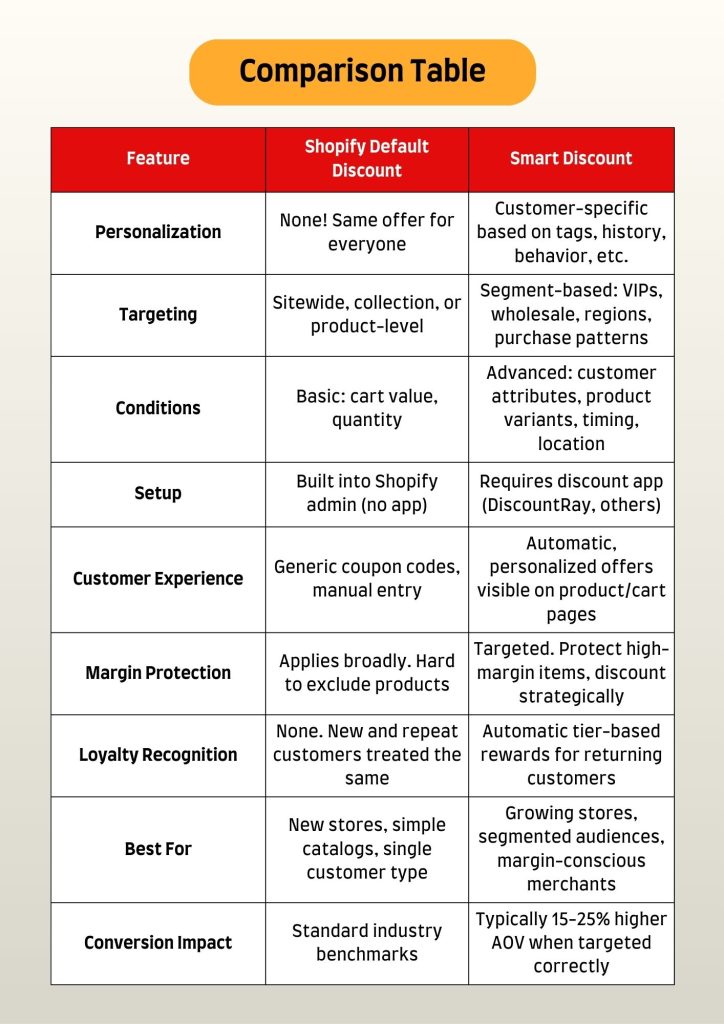
Al elegir entre descuentos predeterminados e inteligentes, ambos son relevantes según la etapa y los objetivos de tu tienda. Los descuentos predeterminados son sencillos y funcionan bien para tiendas nuevas o catálogos sencillos. Se aplican de forma generalizada, a nivel de sitio web o de producto, y no requieren mucha configuración. Si estás empezando o tienes un solo tipo de cliente, son una buena opción sencilla para impulsar las ventas. Sin embargo, no ofrecen experiencias personalizadas y la segmentación por cliente es limitada.
Por otro lado, los descuentos inteligentes son más estratégicos y personalizados. Permiten ofrecer ofertas personalizadas según el comportamiento del cliente, su historial de compras y más. Esto los hace ideales para tiendas en crecimiento con audiencias segmentadas, especialmente si se prioriza el margen de beneficio. Los descuentos inteligentes ayudan a proteger los artículos con alto margen de beneficio y pueden recompensar automáticamente a los clientes fieles, lo cual es importante para la retención. Si observa un crecimiento constante y desea aumentar el valor promedio de los pedidos a la vez que protege sus márgenes de beneficio, vale la pena considerar los descuentos inteligentes.
No todas las tiendas necesitan cambiar de inmediato. Pero si reconoces tres o más de estos patrones, habrás llegado al punto en que los descuentos predeterminados empiezan a costarte más de lo que te ayudan.
Tienes compradores habituales
Y cuando visitan tu tienda, ven la misma oferta de “10% de descuento” que le estás mostrando a alguien que hizo clic en un anuncio de Instagram hace diez segundos.
Esto no les parece bien. Y tú tampoco deberías. Cuando el valor del ciclo de vida del cliente importa, tratar a todos por igual deja de tener sentido.
Organizas una promoción de "15% de descuento en todo" para aumentar los ingresos. Funciona, las ventas suben. Pero al analizar las cifras posteriormente, las ganancias disminuyeron. Porque rebajaste productos que ya se estaban vendiendo. Ofreciste 15% a clientes que estaban dispuestos a pagar el precio completo. Rebajaste los productos recién llegados antes de que nadie tuviera la oportunidad de comprarlos a precio regular.
Si ha notado este patrón (ventas en aumento y ganancias estancadas o en descenso), es una clara señal de que los descuentos amplios están trabajando en su contra.
Ofreces 10% de descuento cada fin de semana. O 15% de descuento el primer lunes de cada mes. O envío gratis todos los días festivos. Tus clientes lo han notado. Conocen la tendencia, así que esperan.
El abandono del carrito es alto entre periodos de rebajas porque la gente sabe que viene otro descuento. Los has acostumbrado a esperarlo. Ahora estás atascado. Si detienes las ventas, las conversiones bajan. Si las mantienes activas, ya no podrás vender al precio completo.
Vendes al por mayor y al por menor a través de la misma tienda Shopify. O tienes cuentas B2B que requieren condiciones de pago neto junto con los clientes habituales. O realizas envíos internacionales y deseas ofrecer promociones específicas para cada región.
Los descuentos predeterminados no pueden gestionar esto. No se puede mostrar un precio a los compradores mayoristas y otro a los minoristas sin crear manualmente códigos de descuento separados y esperar que los usuarios usen el correcto.
Tu experiencia de pago incluye un campo para el código de cupón. Y ese campo crea un problema. Los clientes se detienen y se preguntan si hay un código mejor. Ahora buscan mejores opciones. Algunos se distraen y no vuelven.
Quieres que el proceso de compra sea fluido y moderno, pero los códigos de cupón parecen una reliquia. Crean fricción cuando buscas impulso.
Cambiar a descuentos inteligentes no significa descartar todo lo que has creado. Significa ajustar lo que no funciona y escalar lo que sí.
Esto es lo que los comerciantes con visión de futuro están cambiando en 2026.
Dejen de ofrecer "todos obtienen un descuento de 10%" y comiencen a preguntar "¿quién necesita realmente este descuento para convertirse?"
Los clientes VIP podrían no necesitar un descuento de 10%. Ya son fieles. Lo que podrían valorar más es el acceso anticipado a nuevos productos u ofertas exclusivas. Quienes visitan la tienda por primera vez podrían necesitar un incentivo mayor, tal vez un descuento de 15% en su primer pedido, pero solo en colecciones específicas donde sus márgenes lo permitan.
El cambio aquí es de descuentos generales a ofertas específicas. Los diferentes segmentos ven incentivos diferentes. Esto protege sus márgenes en clientes que comprarían de todas formas, a la vez que se utilizan los descuentos estratégicamente donde importan.
Olvídate de “AHORRA10” y comienza a mostrar descuentos automáticamente según lo que haya en el carrito o quién esté comprando.
En lugar de pedirles a los clientes que recuerden un código, muéstrales la oferta directamente: "Obtén un descuento de 15% al agregar un artículo más". O "Como cliente recurrente, has desbloqueado el envío gratis en este pedido".
Esto elimina la fricción. Los clientes no se preguntan si hay una mejor oferta en otro lugar. Ven la oferta y deciden. Los descuentos automáticos resultan modernos porque se ajustan a cómo los clientes esperan que funcionen las experiencias digitales en 2026.
Los comerciantes inteligentes excluyen sus productos más vendidos y de alto margen de las promociones generales. El inventario de baja rotación se rebaja, pero los productos que se venden bien a precio completo se mantienen a precio completo.
Esto requiere control a nivel de producto. Los descuentos predeterminados lo dificultan. Los sistemas de descuento inteligentes lo hacen estándar. Puedes seguir realizando promociones sin perder ganancias en artículos que ya estaban generando conversiones.
Deja de tratar a los clientes recurrentes como nuevos visitantes. Empieza a reconocer tu historial de compras y a recompensarlo.
Etiqueta a tus clientes según el número de pedidos o el gasto total. Crea ofertas por niveles: los clientes con 1 a 3 pedidos reciben un incentivo, mientras que los clientes con 4 o más pedidos reciben algo mejor. También puedes ofrecer acceso exclusivo a las ofertas VIP antes del público general.
Esto no requiere que gestiones listas manualmente ni envíes correos electrónicos personalizados cada semana. El sistema etiqueta automáticamente a los clientes según su comportamiento. Tus reglas de descuento responden a esas etiquetas.
Cambiar de sistema parece más difícil de lo que realmente es. La clave está en definir elementos como la lógica de descuento predeterminada y la lógica de descuento inteligente antes de empezar. La mayoría de los comerciantes que lo hacen metódicamente completan la transición en 30 a 90 días sin interrumpir las ventas en curso.
Aquí te explicamos cómo.
Antes de cambiar algo, comprenda qué funciona y qué no.
Enumera todos los descuentos activos. Analiza los datos: qué descuentos impulsaron las conversiones y cuáles solo redujeron el margen. Identifica tus segmentos de clientes, incluso los más básicos como "nuevos vs. recurrentes" o "minoristas vs. mayoristas".
Algunos descuentos predeterminados podrían funcionar bien. ¿Una simple oferta de bienvenida para quienes compran por primera vez? Consérvala si genera conversiones. ¿Una oferta en toda la página que reduce tu margen cada mes? Esa es la que debes reemplazar.
Esta auditoría toma una hora. Pero le ahorra tener que hacer cambios basándose en suposiciones en lugar de datos.
No intentes personalizarlo todo desde el primer día. Empieza por tu segmento de mayor valor. Para la mayoría de los comerciantes, son los clientes habituales. Ya compran y confían en ti.
Crea una oferta específica para este grupo. Quizás un descuento de 15% al añadir tres artículos. Quizás envío gratis en todos los pedidos. Quizás acceso anticipado a nuevos productos.
Pruébelo durante dos a cuatro semanas. Mida el impacto. ¿Aumentó el valor promedio de sus pedidos? ¿Mejoró la retención?
Si funciona, quédatelo. Si no, ajústalo. En cualquier caso, has aprendido algo sin tener que reestructurar por completo tu estrategia de descuentos.
Necesitarás un aplicación de descuentoEl sistema predeterminado de Shopify no puede aplicar lógica condicional ni segmentar clientes. Aplicaciones como DiscountRay (y otras) sí pueden.
Busque algunas características clave: etiquetado y segmentación de clientes, reglas de descuento condicional (lógica si/entonces), capacidad de excluir productos o colecciones específicos y aplicación automática de descuentos sin códigos de cupón.
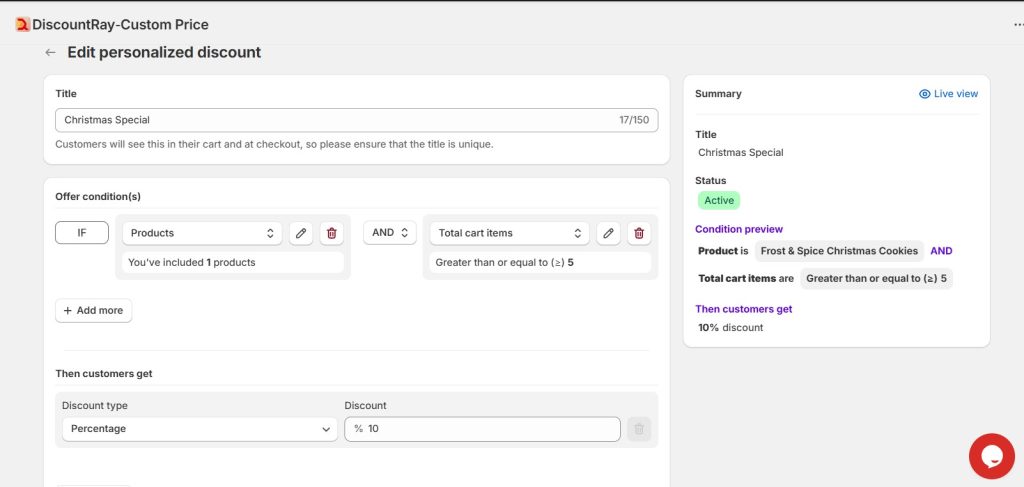
La configuración suele tardar entre una y dos horas para el primer descuento. Una vez que comprenda la lógica, crear nuevos descuentos toma entre 10 y 15 minutos.
Una vez que tu primer segmento funcione, añade otro. Y luego otro.
Así es como puedes escalar los descuentos personalizados en Shopify sin perder el control.
Quizás crees un descuento para quienes compran por primera vez. Luego, otro para los clientes de una región específica. Y luego, otro para quienes compran de tu colección ecológica.
Desarróllalos gradualmente. No intentes lanzar diez segmentos en una semana. La complejidad te abrumará y no sabrás qué cambios impulsan qué resultados.
Un ritmo razonable: un segmento nuevo cada dos semanas. Para el tercer mes, tendrás seis o siete funcionando sin problemas.
Este es el paso más difícil para algunos comerciantes. Llevan dos años operando con el programa "10% los fines de semana libres". Parece arriesgado dejarlo.
Pero si ha desarrollado alternativas específicas que funcionan mejor, los antiguos descuentos generales no le ayudan. Solo le restan margen.
Empieza por reducir la frecuencia. Si realizabas ofertas en todo el sitio web todos los fines de semana, prueba a hacerlo cada dos fines de semana. Monitorea la evolución de las conversiones. Si no disminuyen (o si mejoran porque las ventas parecen menos predecibles), reduce aún más la frecuencia.
Con el tiempo, podrías eliminar por completo los descuentos generales del sitio web. O podrías mantener uno o dos para momentos específicos, lanzamientos de productos o liquidaciones de fin de temporada.
El objetivo no es eliminar todos los descuentos. Es eliminar los que perjudican a tu negocio.
Descuento predeterminado vs. descuento inteligente de Shopify: la teoría importa menos que los resultados. Esto es lo que sucedió cuando tres comerciantes de Shopify cambiaron de descuentos predeterminados a descuentos inteligentes.
Vendieron tanto a compradores mayoristas (gerentes de oficina, equipos de compras) como a clientes minoristas (personas que compraban para oficinas en casa). Todos recibieron el mismo código de descuento 10%. Los compradores mayoristas esperaban mejores precios.
Etiquetaron a los clientes según su volumen de compra e historial de pedidos. Los compradores mayoristas (cualquiera que hubiera realizado un pedido superior a $500) obtuvieron precios escalonados: 15% de descuento al alcanzar $500, 20% de descuento al alcanzar $1000, envío gratis en todos los pedidos. Los clientes minoristas obtuvieron descuentos menores basados en el carrito, 10% de descuento al alcanzar $100.
El valor promedio de los pedidos mayoristas aumentó en 281 TP3T. Los márgenes minoristas mejoraron porque dejaron de aplicar descuentos a pedidos pequeños que no los necesitaban.
Qué significa esto para usted: Si atiende a varios tipos de clientes, tratarlos por igual implica un gasto innecesario. La segmentación no complica las cosas, sino que aclara quién obtiene qué y por qué.
Glow & Gather llevaba más de un año operando la tienda "15% fuera de fin de semana". Los clientes esperaban las ofertas. El tráfico entre semana no generaba buenas conversiones. La marca parecía barata porque los descuentos eran muy predecibles.
Suspendieron las ventas en todo el sitio web y crearon eventos temáticos de duración limitada. La "Venta Nocturna Consciente" se realizó de 8 p. m. a 11 p. m. los miércoles, ofreciendo un descuento de 20% solo en productos de aromaterapia. También usaron Descuentos personalizados para tiendas de velas, ofreciendo a los clientes etiquetados como centrados en la sostenibilidad 15% de la colección ecológica.
Los clientes dejaron de esperar descuentos predecibles porque las ofertas se volvieron variadas y con plazos definidos. La marca se percibió como más premium. Los márgenes mejoraron porque ya no descontaban todo constantemente.
Qué significa esto para usted: La dependencia de los descuentos se produce cuando se acostumbra a los clientes a esperar la misma oferta repetidamente. Las ofertas variadas y específicas rompen ese ciclo.
Realizaron ofertas mensuales en todo el sitio para liquidar el inventario. Pero los nuevos productos también se vieron afectados por esas ofertas, lo que perjudicó los márgenes de ganancia de productos que la gente ya estaba entusiasmada por comprar.
Desarrollaron reglas específicas para cada producto. Novedades: sin descuentos durante los primeros 60 días. Artículos de temporada: descuentos progresivos según el tiempo de permanencia en el sitio web (10% a los 30 días, 20% a los 60 días, 30% a los 90 días). Clientes VIP: acceso anticipado a las nuevas colecciones, sin mayores descuentos.
Los márgenes del nuevo inventario mejoraron 18%. El inventario antiguo se liquidó, pero con descuentos específicos en lugar de rebajas generalizadas. Los clientes valoraron el acceso anticipado tanto como las rebajas de precios.
Qué significa esto para usted: No es necesario descartar todo para vender un producto. La segmentación estratégica protege lo que funciona y, al mismo tiempo, te brinda herramientas para solucionar lo que no funciona.
Los sistemas de descuento predeterminados e inteligentes están divergiendo más que nunca, a medida que aumentan las expectativas de personalización de los clientes y se intensifica la competencia. Los comerciantes que se adapten pronto a los descuentos inteligentes y personalizados tendrán una clara ventaja, mientras que quienes se apeguen a los descuentos predeterminados corren el riesgo de perder terreno. Los descuentos inteligentes no se basan en la complejidad, sino en la relevancia. Permiten adaptar las ofertas al comportamiento del cliente, garantizando que los compradores fieles obtengan recompensas acordes a su valor. Este cambio no significa abandonar lo que funciona, sino reemplazar prácticas obsoletas con estrategias más inteligentes. Empieza con un segmento pequeño, pruébalo y mide el impacto. En 90 días, verás la diferencia que los descuentos inteligentes pueden marcar en tu tienda.
Los descuentos predeterminados de Shopify son los códigos de descuento básicos y los descuentos automáticos integrados en tu panel de control. Puedes crear descuentos porcentuales, de importe fijo o con envío gratuito sin instalar ninguna aplicación. Son sencillos pero limitados: no se pueden acumular, aplicar reglas complejas ni personalizar cómo se muestran al finalizar la compra.
Los descuentos inteligentes son configuraciones avanzadas de descuentos que van más allá de las opciones básicas de Shopify. Permiten acumular varias ofertas, crear precios escalonados (compra más, ahorra más), aplicar precios específicos para cada cliente o activar descuentos según las condiciones del carrito, como combinaciones de productos o cantidad del pedido. Normalmente, se necesita una aplicación de terceros para configurarlos.
Siguen funcionando, pero son demasiado limitados para la mayoría de las tiendas en crecimiento. Los descuentos predeterminados no permiten acumular ofertas, crear precios por volumen, aplicar tarifas diferentes para clientes mayoristas y minoristas, ni lanzar promociones complejas como "compra 3 y llévate 20% de descuento + envío gratis". Si trabajas con B2B, pedidos al por mayor o lanzas promociones sofisticadas, alcanzarás sus límites rápidamente.
Los descuentos regulares se aplican a una oferta a la vez con reglas básicas. Los descuentos inteligentes te permiten combinar varias ofertas, establecer condiciones según las etiquetas del cliente o el historial de compras, crear descuentos por cantidad y personalizar cómo aparecen los descuentos en tu carrito y en el proceso de pago. Piensa en los descuentos regulares como "20% de descuento en todo" y los descuentos inteligentes como "Los clientes VIP obtienen 15% de descuento, más 10% adicionales al comprar 5 o más artículos, además de envío gratis por más de $100".
Si ofreces promociones sencillas para un solo tipo de cliente (por ejemplo, minoristas), los descuentos predeterminados de Shopify son suficientes. Pero si trabajas con B2B, mayoristas, precios por volumen o quieres acumular ofertas, necesitarás una aplicación de descuentos. La mayoría de las tiendas superan los descuentos predeterminados una vez que empiezan a segmentar a los clientes o a ofrecer precios diferenciados.
Comience con nuestro plan gratuito o desbloquee funciones premium con una prueba gratuita de 14 días.
¡Garantía de devolución de dinero de 30 días!



 Español
  English
  日本語
日本語  Français
  Deutsch
  简体中文
简体中文  Italiano