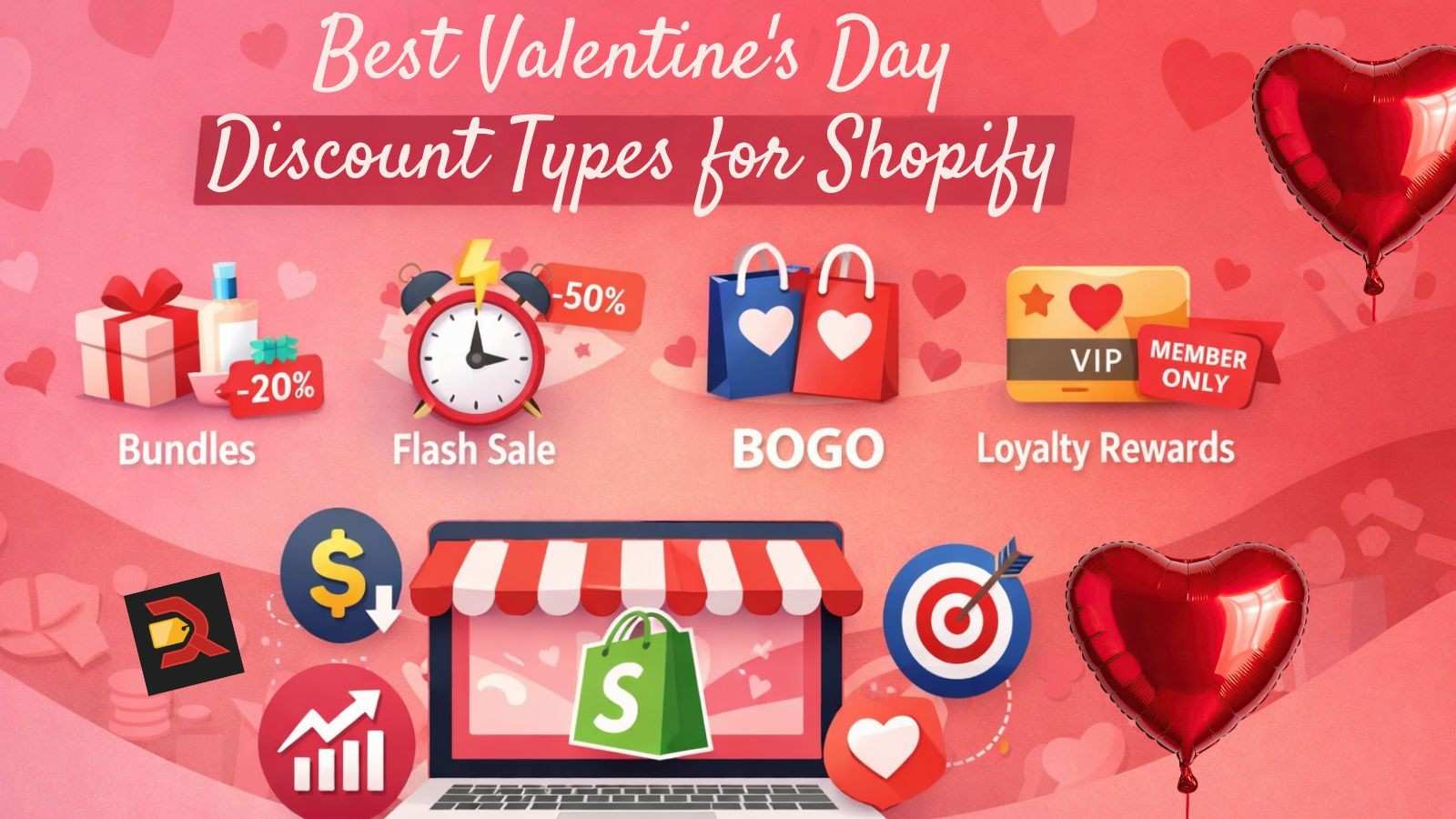
Valentine’s Day discount types for Shopify are incredibly helpful to grow your sales on the platform. An NRF survey of 8,020 U.S. adults, conducted in 2025, projected Valentine’s Day spending to reach a record $27.5B. That level of spending shows why you, as a Shopify merchant, should take this event seriously.
Many stores run offers without thinking about how customers behave when buying gifts. Some discounts push fast clicks but low order value. Others lift cart size, but only if the setup is clear. This guide focuses on how different discount types perform and when each one works best.
Customers browsing on Valentine’s Day are not doing so casually. They usually arrive with a deadline and a purpose. They want a gift that feels thoughtful and arrives on time. Because of that, the structure of the discount often matters more than the percentage.
A flat discount can feel easy, but it does not guide decisions. But a well-framed offer reduces choice stress and speeds up checkout. Gift-focused buyers respond better to clarity than complexity. That is why you should focus on the discount format. It is the one that quietly affects your results.
The comparison that we made between the discount types focuses mainly on the following areas:
These factors matter more than fancy wording during peak gifting days.
We also looked at timing pressure and perceived fairness. Customers notice when rules feel confusing or unfair. Clear thresholds and visible savings build trust. That trust is often what pushes the final click.
If you are still planning your overall Valentine’s Day campaign, our complete guide on Valentine’s Day discounts for Shopify stores covers promotion ideas, channels, and timing in detail.
Bundles work well because customers do not need to think hard about what to buy. They are one of the best Valentine’s Day discounts Shopify stores use for gift-related purchases. Customers feel confident when items are already paired. This matters when you are buying for someone else.
Bundles also raise order value without pressure. They perform best when products naturally belong together. Examples include self-care sets or couple-themed items. Poorly matched bundles tend to get ignored. Bundle offers also fail due to clutter. Too many options slow down decisions.
Tiered discounts, on the other hand, encourage customers to add one more item. It works because the reward feels earned. Many merchants compare BOGO vs tiered discounts in Shopify setups before choosing because tiered pricing feels safer for margins.
Tiered offers work best when price gaps are realistic. If thresholds feel unreachable, shoppers get annoyed and leave. So, make sure you set reasonable price gaps with clear labels.
Limited-time percentage discounts create urgency. They work best close to the holiday when customers feel time pressure and just want to buy something good at the last minute. Make sure that your Valentine’s Day flash sale Shopify campaigns have clear start and end times. Also, keep in mind that flash sales perform best on familiar products where shoppers already understand value.
Buy-One-Get-One-Free or BOGO deals get attention fast. They feel generous and simple, which is why many Valentine’s Day Shopify offers include them. But they are not always profitable. They work best on low-cost or clearance items. Shipping costs and margins need careful planning.
Compared with tiered pricing, the risk in BOGO is higher. BOGO drives volume but not always value. It fits inventory movement goals more than profit maximization. So, think before you decide to run such offers on your store.
Loyalty-based offers feel personal. They reward repeat buyers and also protect margins. Exclusive discounts build emotional connection and support long-term retention. This makes them part of strong Shopify seasonal discount strategies.
Sitewide discounts attract broader traffic but reduce control. They can increase short-term sales while lowering average value. Loyalty-focused stores often see better returns by keeping Valentine’s offers limited to repeat customers. But clear communication is important here. Hidden rewards frustrate users. But visibility increases redemption and trust.
Manual codes rely on customers’ effort. Codes can get forgotten, mistyped, or ignored, especially on mobile devices. This creates checkout friction during a time-sensitive purchase.
Whereas, automatic discounts apply savings instantly. They reduce friction and increase trust. Many merchants prefer automatic discounts for Shopify Valentine’s Day campaigns because they are efficient, quick in performance, and need no coding.
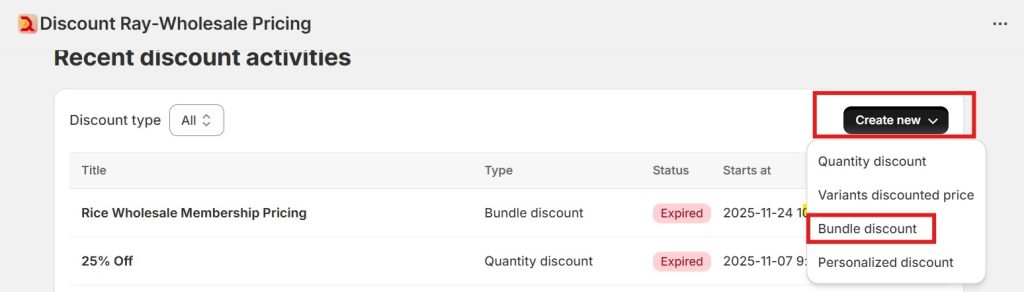
Such automation also reduces errors during traffic spikes. Shopify third-party discount apps help you achieve this without any difficulty. They come with advanced features and discounting options to customize your offers with ease and convenience.
There is no universal answer. Choosing the right format depends on store size, pricing, and audience behavior. Smaller catalogs benefit from bundles. Larger catalogs often perform better with tiers. Fast-moving items suit flash offers. Retention-focused stores lean on loyalty rewards.
Think about clarity first. Then think about margins. The best Valentine’s Day discounts Shopify stores run usually balance both. Below is a comparison table of Shopify’s discount types to help you decide which one to choose for Valentine’s Day offers.
| Store situation | Discount type that works best | Why it works |
| Small product catalog | Product bundles | Simplifies choices and increases order value |
| Wide product range | Tiered discounts | Encourages bigger carts with margin control |
| Fast-moving or seasonal items | Flash sales | Urgency pushes quick decisions |
| Low-cost or clearance products | BOGO deals | Clears stock and increases volume |
| Stores focused on repeat buyers | Loyalty-only offers | Feels personal and supports retention |
Running too many offers at once is a common issue. It confuses shoppers and also slows down decisions. Simple choices convert better and make your customers happy.
Another mistake is late planning. Buyers start early. Late offers miss early-intent traffic. Timing is part of conversion. You’d better start right now, or else you will miss the chance to make the most of this event.
Mobile experience is also ignored. Most gifting decisions happen on phones. If discounts are hard to read, they fail. This affects many Valentine’s Day promotions for Shopify stores.
Most guides focus only on the discount itself. They ignore what happens around it. Here is what happens…
One big factor for such events is shipping. Valentine’s Day shoppers care deeply about delivery timing. If they are unsure about their gift’s arrival time, even a good discount will not convert. Hence, Clear shipping cutoffs and visible delivery messages help buyers feel confident enough to place the order.
Another point most Shopify merchants miss is emotion. Valentine’s Day purchases are not purely price-driven. Buyers are choosing gifts that represent care and intention. Discounts should support that feeling, not distract from it.
Many guides also fail to address what happens beyond the checkout process. You must have noticed by now that retention matters after the holiday. A smart Valentine’s offer can bring customers back later through loyalty rewards, follow-up incentives, or positive purchase experiences.
This is why Shopify seasonal discount strategies should look beyond one single day and focus on long-term customer value.
Valentine’s Day discount types for Shopify work best when they match customers’ intent and the store’s reality. By that, we mean not every format suits every business. The goal is clarity and confidence. Choose what works best for your store. Thoughtful planning leads to better results. Simple structures outperform complex rules.
When discounts feel fair, shoppers respond. That is how seasonal campaigns turn into long-term growth. You do not want your biggest sales to end on Valentine’s Day. The goal is to carry that momentum forward throughout the year. Check out our other blogs if you need more tips. Wish you good luck!
There is no single best option for every store. Product bundles and tiered discounts often convert well because they guide buying decisions. Flash sales work better for last-minute shoppers, while loyalty offers perform best for repeat customers.
Bundles work better for small catalogs and gift-focused products. Tiered discounts perform better when you want to increase cart size across a wide product range. The right choice depends on pricing and customer behavior.
BOGO works best for low-cost or clearance items. It increases AOV but can reduce profit if margins and shipping costs are not planned carefully. Many stores prefer tiered discounts for better margin control.
Yes, flash sales perform well close to Valentine’s Day when time pressure is high. Clear start and end times are critical. Overusing flash sales can reduce urgency and weaken results.
Sitewide discounts increase reach but reduce control. Loyalty-only offers feel more personal and protect margins. Stores focused on retention often see better long-term results with exclusive offers.
Automatic discounts usually perform better during peak gifting periods. They reduce checkout friction, especially on mobile. Customers do not need to remember or enter a code.
Most buyers start shopping early. Running offers one to two weeks before Valentine’s Day helps capture early intent traffic. Late promotions often miss high-value buyers.
Yes, when planned correctly. Discounts that feel clear and fair build trust. That trust increases the chance of repeat purchases after the holiday.
Get started with our free plan or unlock premium features with a 14-day free trial.
30-day money-back guarantee!



 English
  日本語
日本語  Français
  Deutsch
  Español
  简体中文
简体中文  Italiano