
The holiday rush is over, but many Shopify merchants enter January with a quiet problem. Revenue looked strong in December, yet margins feel weaker, pricing feels messy, and customers suddenly hesitate to buy without another discount. What worked in Q4 often creates confusion in Q1.
This is where pricing discipline matters. A clear Shopify pricing strategy helps you regain control after holiday sales, protect AOV, and stop repeating discount-heavy habits that slowly erode profit. Q1 is not about aggressive growth. It is about correction, clarity, and smarter decisions.
In this guide, you will learn what holiday discounts actually break, how to reassess pricing in Q1, and which practical strategies help you sell profitably on Shopify without relying on constant discounts.
Holiday discounts often look successful in December because revenue goes up. But underneath, they quietly damage pricing control. Margins don’t just shrink; they become unpredictable. Different discounts stack in different ways, and suddenly it’s hard to tell which orders were actually profitable and which ones only looked good on the surface.
At the same time, customers learn a habit. Returning shoppers start waiting. They delay purchases because they expect another deal. This is why January traffic often converts worse unless discounts are added again.
Sitewide sales make this worse. Everyone pays the same price. High-value customers get discounts they didn’t need, and pricing control disappears across your Shopify store.
If you don’t fix your pricing logic in Q1, you end up repeating Q4 mistakes all year.
Q1 is not the time for aggressive overhauls. Before applying the Shopify pricing strategy, it is time for re-evaluation. After the intensity of holiday sales, merchants need clarity more than speed.
Start with costs. Recalculate everything: product costs, manufacturing, shipping, packaging, marketing spend, platform fees, subscription fees, and transaction fees. These fees may vary by plan. Your pricing must fully cover these and still leave room for profit.
Next, review Q4 data. Look at which products actually performed well. Identify which tactics worked, such as bundles or discounts, and which ones only inflated revenue without protecting margins. Pay close attention to customer acquisition costs during the holiday period.
Then assess the market. Check competitor pricing and identify the realistic post-holiday price range customers are willing to accept.
Finally, clarify your value proposition. Whether it is quality, sustainability, design, or service, this is what supports your pricing decisions in Q1.
Q1 pricing should focus on control, not volume. The goal is to sell profitably after a heavy discount season, without training customers to wait for the next sale. The strategies below are practical, easy to apply, and designed to protect margins on Shopify.
Cost-plus pricing is a good starting point in Q1. Recalculate your total cost per product, including product, shipping, marketing, and platform fees, then apply a fixed markup. This guarantees margin coverage and helps reset pricing discipline after Q4. It is not perfect, but it prevents accidental loss-making sales.
Value-based pricing works well if your brand has differentiation. If customers buy because of quality, design, sustainability, or service, price is based on perceived value rather than cost alone. In Q1, this helps reduce dependency on discounts while maintaining conversion from loyal buyers.
Competitive pricing is useful in crowded categories. Monitoring competitor price ranges helps you stay realistic, but the goal is alignment, not undercutting. Constantly racing to the lowest price usually leads to margin erosion.
Penetration pricing can be effective for new products launched in Q1. A lower introductory price can help generate early traction, but it should be time-bound and supported by a clear plan to increase prices later.
Bundle discount is one of the safest Q1 tactics. Bundles increase order value, help move slower inventory, and reduce the need for deep discounts on individual products.
Dynamic pricing uses data like demand and inventory to guide price changes. While more advanced, even small adjustments can prevent over-discounting low-stock or high-demand items.
Finally, personalized discounts replace sitewide sales. Discounts are applied only when conditions are met, such as cart value, customer type, or product selection. This keeps incentives targeted and margins protected.
Shopify provides several built-in tools that help merchants apply pricing strategies without heavy technical work. Your plan level matters. As you grow, upgrading can reduce transaction fees, unlock better shipping rates, and provide deeper reports that reveal which discounts actually impact profit.
The App Store includes discount apps for bundle pricing, conditional discounts, and personalized offers. These tools allow merchants to replace blanket sales with more controlled pricing rules. This is especially useful in Q1, when tighter margins demand precision.
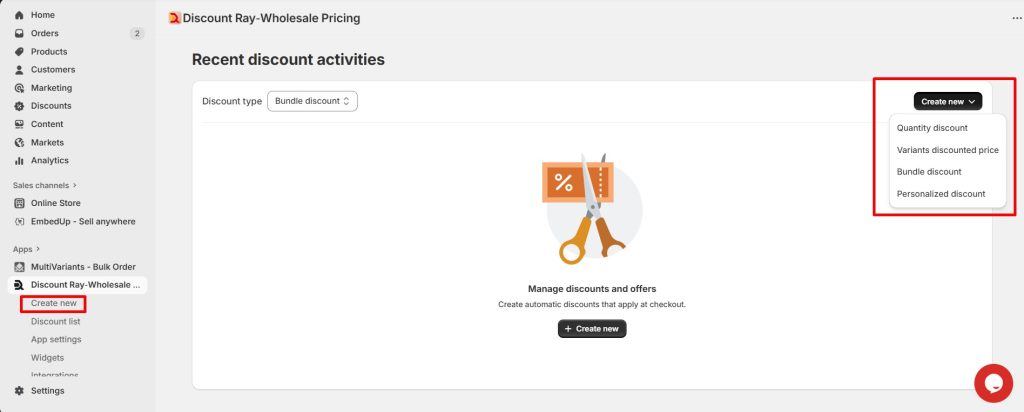
For B2B and wholesale sellers, Shopify’s B2B features (available on Plus) enable volume-based pricing and custom workflows, making it easier to separate retail and wholesale pricing logic.
A profitable Q1 does not look like Q4. Discount volume is usually lower, but pricing is more intentional. A clear Shopify pricing strategy helps merchants regain control after holiday sales, instead of repeating aggressive promotions that hurt margins.
You should expect higher AOV on discounted orders, not because customers are spending recklessly, but because incentives are structured to encourage meaningful carts. Returning customers convert better, since they already trust your brand and need less motivation to buy again.
Operationally, things feel calmer. With fewer overlapping discounts, pricing becomes easier to understand. This reduces support issues related to confusion at checkout and makes revenue more predictable.
Q1 success is not about aggressive growth. It is about building stable, healthy revenue through disciplined pricing after a heavy discount season.
Q4 rewards speed and volume. Q1 rewards control. After heavy discounting, the biggest risk is doing nothing and letting poor pricing habits carry forward.
A disciplined Shopify pricing strategy in Q1 does not require a full overhaul. It requires intentional choices. You do not need to apply every strategy at once. Pick one or two that match your current situation. Start with cost-plus pricing to regain margin clarity. Add bundle discounts to protect AOV while clearing inventory. Replace sitewide sales with personalized discounts to regain pricing control.
The goal is not to sell more at any cost. It is to sell predictably, profitably, and with fewer surprises. Merchants who build pricing discipline now on Shopify avoid panic discounts later and create a stronger foundation for the rest of the year.
Yes, but selectively. January discounts should support a clear goal, not replace Q4 volume tactics. Focus on controlled offers tied to cart value, returning customers, or specific products.
Stop using predictable, sitewide discounts. When customers only see discounts under certain conditions, they stop expecting constant deals. Threshold-based and customer-specific incentives reduce the habit of waiting and encourage earlier purchases.
In most cases, yes. Personalized discounts target buyers who are more likely to convert, such as returning or high-value customers. This protects margins and avoids giving unnecessary discounts to shoppers who would have paid full price.
Penetration pricing, bundles, or product-specific discounts. These strategies encourage customers to add items instead of reducing order value.
Get started with our free plan or unlock premium features with a 14-day free trial.
30-day money-back guarantee!



 English
  日本語
日本語  Français
  Deutsch
  Español
  简体中文
简体中文  Italiano