You nailed your summer sales event. Orders flew in, maybe even faster than you expected. But now that the rush is over, you’re staring at a list of summer buyers… and wondering if they’ll ever come back.
Here’s the tough truth: most won’t. You didn’t give them a reason to, now did you?
That’s where retention comes in. Keeping your buyers around isn’t just good business. It’s the easiest way to grow profit without burning more ad spend. A repeat customer costs less, spends more, and sticks with you longer.
In this guide, we’ll walk through:
Because a great summer sales event is just the start. The real win is turning those one-time buyers into repeat customers.
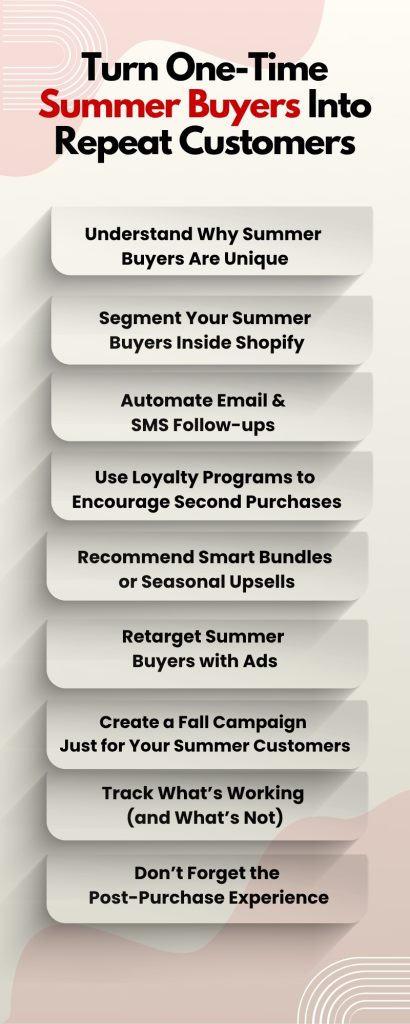
Summer shoppers don’t buy like regular customers. Most show up for a deal, not your brand. It’s usually a one-time thing – vacation stuff, seasonal trends, or a quick discount grab. They’re not thinking long-term. They needed flip-flops or a cooler, and now they’re gone.
And that’s the problem.
Following a busy summer sale prep and launch-day, you can’t risk losing all those customers. If you don’t follow up the right way, you lose them. But it’s not a lost cause.
Here’s what helps:
They’re not loyal yet. But they might be if you make the next step easy and relevant.
Seasonal buyers are deal-driven, and they shop for one-off needs (a trip, a gift, a school event). And they don’t usually come back unless you give them a reason.
That’s where Shopify’s filters, tags, and smart segments help.
You don’t need a complicated system. Just use what’s already built into Shopify. Tag your summer buyers so you can talk to them differently later. For example:
These simple tags help you follow up with the right people. A beachwear shopper in July might want skincare in August. A parent buying lunchboxes might need back-to-school deals next.
Segmenting your list makes your messages smarter. You stop guessing and start sending stuff that feels personal.
It also helps you:
Summer buyers are slippery. If you treat them like regulars, you’ll lose them. But if you tag them right and follow up with care, you’ve got a real shot at keeping them around.
Don’t let the sale be the end of the story. Use those segments. Keep the door open.
Summer buyers are easy to lose if you don’t check in. A few automated messages can bring them back without you lifting a finger.
Here’s a simple follow-up flow you can try:
Just pick a trigger (like “purchase date”), write a few quick messages, and let it run. No fancy design needed. Friendly, helpful, and to the point works best.
Try subject lines like:
Segment smart. Maybe one group got discounts, another bought full-price. Maybe some ordered once, others twice. Different paths, different messages.
The goal? Don’t let them forget you. One helpful message after their first order can turn them into a repeat buyer.
Start with one flow and let it run for a month. Check the open and click rates. Then tweak.
Simple setup! Big payoff!
Summer sales event brings in new customers fast, but the loyalty program keeps them coming back. If you want more second purchases, start rewarding them right after the first one.
A few simple ways to fold loyalty into your follow-up:
Personalized perks help build long-term habits. Once a customer sees that points or perks stack up, they’re more likely to return, even when there’s no sale.
Here’s why it matters: According to BIA Advisory, repeat customers spend 67% more than new ones. And loyalty programs reduce churn by keeping your brand top-of-mind between purchases.
You don’t need a huge rewards system to start. Even a small thank-you offer feels like a win. The key is consistency. Make your program visible and rewarding from day one.
So if you just ran a summer sale, don’t stop there. Use loyalty as a reason to come back, not just a thank-you after they’ve left. Make them feel like VIPs. Because if you don’t, someone else will.
This is one of the easy summer marketing ideas to get one more order from your summer shoppers. Suggest a bundle that makes sense for what they already bought.
Smart bundling works best when it’s specific and timely. That’s where Shopify mix and match bundle apps come in. Keep it casual. Subject lines like:
Timing matters. Too soon – spammy, too late – they’ve moved on. Aim for 2–4 weeks after their summer order.
Bundles aren’t just about bigger carts. They help customers find what they need next without scrolling through your whole store. That’s helpful and builds trust. This works great with email, SMS, and even retargeting ads. Once you set it up, it runs quietly in the background.
And hey, if you’ve already got summer order data, you’ve already got what you need to start.
Ads can be expensive. However, retargeting the right summer buyers is money well spent.
Start by pulling a customer list from Shopify. Focus on who bought during your summer sale but haven’t come back. Tools can help you build solid retargeting audiences. Here’s who to focus on:
Now run dynamic product ads. These automatically show products they viewed or similar items based on purchase history.
Think: “You grabbed this in July. Ready for your fall upgrade?”
Set a budget limit; no need to go big. A few bucks a day can do the job if the targeting is tight.
Tip: Pair this with your email flows.
Someone clicks your “summer’s over” email and lands on your store, but doesn’t buy? Retarget them with an exclusive fall offer 3 days later.
No need to shout. Just remind them you’re still here and you’ve got something they might want. Ads don’t have to be flashy. They just have to be relevant and well-timed.
Start small by testing one audience. Then scale what works.
Your summer shoppers already know your brand. Now it’s time to give them something special for fall.
Build a small campaign just for them. Think early access, exclusive drops, or loyalty-only perks. You can say, “You shopped with us this summer. Now you’re on the inside.”
Ideas to try:
Promote via email, SMS, and Instagram Stories. No big ad spend needed. Just direct, personal communication can do the trick. Keep the vibe warm and seasonal. Talk like a friend, not a brand. This kind of campaign makes people feel seen, and that’s powerful!
You don’t need a huge catalog update to pull this off. Even curating 3–5 products into a “Fall Edit” feels special when it’s invite-only.
So yes, summer’s over. But for your best customers, that’s just the beginning of something better.
All these retention tactics only matter if they work. So track what’s moving the needle and drop what isn’t. Start with these three:
Then layer in A/B testing. Try two subject lines. For example, two offers or two bundles. See what gets clicks, conversions, and repeat orders.
Don’t get stuck on vanity metrics. It’s not about open rates; it’s about what drives a second order, then a third.
Check weekly and look for trends.
Did buyers from one email reorder faster?
Did loyalty perks boost return rate?
That’s your signal to do more of that. And if something flops? That’s fine, just test the next idea.
Retention is a moving target. The key is to keep listening, tweaking, and learning.
Your retention efforts shouldn’t start after delivery; they should begin the moment someone places an order. A good post-purchase experience makes people feel like they picked the right brand. That feeling sticks.
Start with the basics: What happens between “thank you for your order” and delivery?
Now think about the actual moment the package arrives.
These tiny extras turn a routine delivery into a moment worth remembering (and reordering from).
People might forget what they bought, but they won’t forget how it made them feel. Keep it simple. You don’t need expensive packaging. Just a little effort and thoughtfulness. Post-purchase is the bridge between a one-time sale and long-term loyalty. Most brands ignore it. That’s your edge.
A summer order might feel like just another sale, but it’s not. It’s your first chance to build a lasting relationship.
Merchants who think beyond the sale grow faster and spend less. Why? Because bringing back someone who already bought from you is cheaper and easier than winning a new customer from scratch.
So here’s the move:
You don’t have to build a full retention system overnight. Just start with one follow-up. One bundle. One thank-you that makes them smile. Because when you treat every summer buyer like the start of something—not the end—you’ll see the difference in your fall numbers. And in the kind of customers who stick around for more than one season.
Ideally, within 7–14 days. The longer you wait, the colder the lead.
Test between personalized product recommendations, loyalty points, and time-limited coupons.
Look at AOV, engagement (email opens/clicks), and product type. Prioritize high-value segments.
Yes, using Shopify apps. You don’t need a developer.
Get started with our free plan or unlock premium features with a 14-day free trial.
30-day money-back guarantee!



 English
  日本語
日本語  Français
  Deutsch
  Español
  简体中文
简体中文  Italiano