ShopifyのB2Bボリューム価格設定が、Basic、Grow、Advancedプランで利用可能になりました。シンプルな卸売事業を運営するマーチャントにとって、これは強力な出発点となります。企業プロフィール、支払い条件、カタログベースのボリューム価格設定は、もはやShopify Plus限定の機能ではありません。サードパーティ製アプリを自社のシステム構成に組み込むべきかどうかを判断する前に、これらの点を明確に理解しておくことが重要です。
ネイティブ B2B ボリューム価格設定の限界は、価格設定が 3 つ以上の購入者階層に依存している場合、カタログではなく顧客タグで価格設定する必要がある場合、または卸売戦略が時間の経過に伴う注文履歴に基づいて購入者に報酬を与える場合に、より顕著になります。そこで B2B ボリューム価格設定と ディスカウントレイ 重複した問題解決はやめて、それぞれ異なる問題解決に取り組みましょう。この記事では、両方の側面を正直に解説しているので、ご自身の環境に最適な解決策を判断できます。
2026年4月2日現在、 企業プロフィール、B2Bカタログ、ボリュームディスカウント これらの機能は、ShopifyのBasic、Grow、Advancedプランで追加料金なしで利用できます。以前は、これらの機能を利用するには、月額1,000円から始まるShopify Plusプランへの加入が必要でした。これは、これまで様々な回避策を用いて卸売事業を行ってきた販売者にとって、大きな変化と言えるでしょう。
ネイティブ設定の仕組みは次のとおりです。卸売業者ごとに会社プロファイルを作成し、価格を定義するカタログを作成します。そのカタログ内で、 商品ごとに最大10種類の数量割引価格はバリエーションレベルで適用されます。10個の商品を注文する購入者には1つの価格が表示され、50個の商品を注文する購入者にはそれよりも低い価格が表示されます。購入者がログインすると、価格が商品ページに自動的に表示され、Net 30、Net 60、Net 90などの支払条件は会社レベルで設定できます。
卸売取引口座を2つか3つ持ち、明確で予測可能な価格設定をしている販売業者にとって、これは追加の月額費用なしで非常に優れたシステムです。
このアップデートにより、Shopify の基本的な卸売に対する参入障壁が取り除かれました。2026 年 4 月 2 日以前は、ネイティブ B2B ツールにアクセスするには Shopify Plus に加入する必要がありました。現在、Basic、Grow、Advanced プランの加盟店は、企業プロファイル、支払い条件、ボリューム プライシング、保管されたクレジットカード、米国での ACH 支払い、 最大3つのアクティブなB2Bカタログこれらはすべて、既存のプランに含まれています。
卸売を始めたばかりの業者や、一貫した価格設定で少数のアカウントを運営している業者にとって、これはサードパーティ製アプリやプラットフォームのアップグレードを必要としない実用的な出発点となります。ここで問うべきは、卸売価格設定戦略がネイティブB2Bカタログの構造に適合するか、それともさらに踏み込む必要があるかということです。
Shopifyのボリュームディスカウントを機能させているカタログアーキテクチャは、同時にその限界も規定している。
ベーシック、グロウ、アドバンスプランでは、 すべてのB2B市場において、最大3つのアクティブなカタログを割り当てることができます。その上限は、市場ごとではなく、すべての市場を合わせた合計額に適用されます。カタログが3つあるということは、価格帯も3つあるということです。4つ目のカタログが必要な場合は、Shopify Plusをご利用ください。
2つ目の制約は構造的なものだ。 ネイティブB2Bにおけるボリュームプライシングは、バリエーションレベルで適用されます。購入者は、価格割引を受けるために、特定のバリエーションを規定数量購入する必要があります。青い帽子を15個、灰色の帽子を10個注文した場合、それらの数量を合算しても25個のしきい値には達しません。各バリエーションは個別に評価されます。Shopify B2BのPlusプラン以外では、カートレベルの割引ロジックはネイティブな機能として提供されていません。
設定前に知っておくべき制限事項がさらに2つあります。
DiscountRayはカタログマーケットのアーキテクチャを採用していません。価格設定ロジックは、顧客タグ、行動ルール、割引条件に基づいて構築されています。ShopifyのB2Bボリューム価格設定に全く異なるアプローチで取り組んでいます。
B2B価格設定に関連する主要な特徴:
| 特徴 | ShopifyネイティブB2B | ディスカウントレイ |
|---|---|---|
| ボリュームディスカウント | はい、商品ごとに最大10段階の価格割引が可能です。 | はい、数量割引と段階割引があります。 |
| 価格設定モデル | カタログベース | ルールとタグベース |
| 顧客セグメンテーション | プラスプラン以外では、最大3つのカタログをアクティブにできます。 | 顧客グループとタグ |
| バリアントレベルの価格設定 | はい | はい |
| カートごとの割引 | プラスプラン以外ではご利用いただけません | はい |
| B2BとB2Cの両方に同じ柔軟な割引ルールが適用されます。 | カタログベースのB2B価格設定に限定 | はい、割引ルールは異なる顧客グループを対象とすることができます。 |
| 注文履歴に基づくオファー | ネイティブB2Bカタログには含まれていません | マイルストーン割引規定に基づき利用可能(プロプラン) |
| 行動に基づいたパーソナライズされた価格設定 | ネイティブB2Bカタログには含まれていません | はい(プロプラン) |
| 企業プロフィール | はい | 必須ではありません |
| 支払条件(正味30日/60日/90日) | はい | 適用できない |
| 料金 | Shopifyプランに含まれています | 無料プランあり。有料プランは月額$9から。 |
2026年6月時点のShopifyヘルプセンターのドキュメント、およびDiscountRayのアプリストアの掲載情報と変更履歴に基づいて、機能が検証されています。
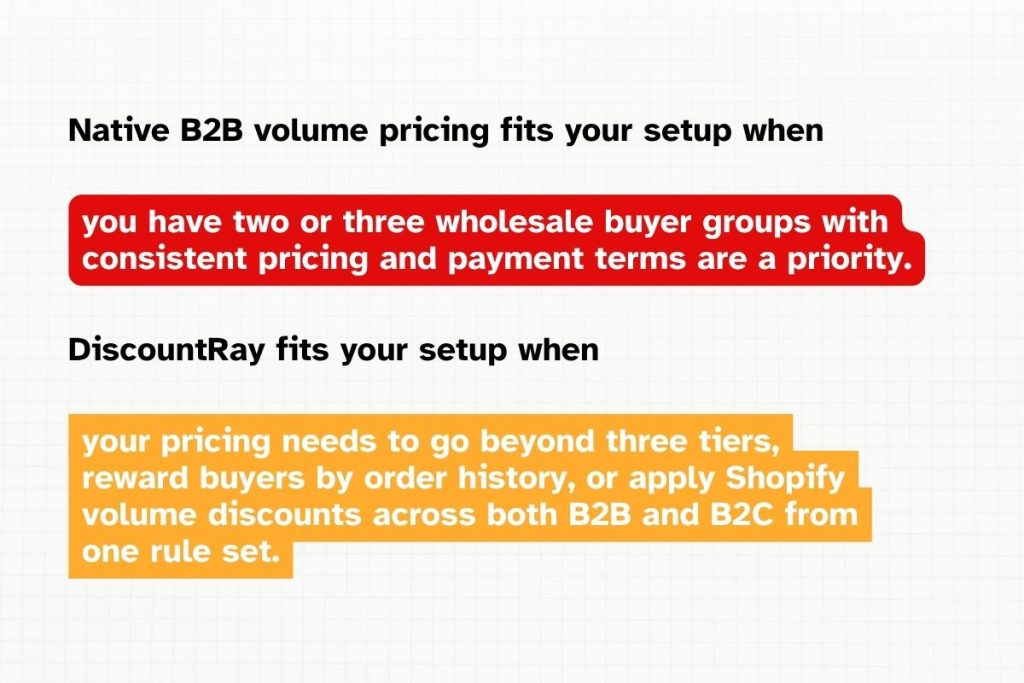
ネイティブB2Bボリューム価格設定は、次のような場合にお客様の設定に適合します。 卸売りの顧客グループが2つか3つあり、価格設定が一貫していて予測可能で、企業プロファイルと支払い条件が卸売りのワークフローにおいて優先事項であり、顧客が同じバリエーションを十分な量注文するため、バリエーションごとの価格割引が適用される場合、標準設定で基本的な要件は十分に満たされ、既存のShopifyプラン以外に費用は一切かかりません。
DiscountRayは、次のような場合にあなたのセットアップに適合します。 価格設定戦略を3段階以上に拡張する必要がある場合、購入者が今日購入する商品だけでなく、過去の注文履歴に基づいて報酬を与えたい場合、または別々のカタログ構造を管理することなく、同じルールセットからB2BとB2Cの両方の購入者に対してボリュームディスカウントを適用する必要がある場合に、このプランは最適です。また、顧客の所在地、カートの合計金額、または購入者の行動に基づいてパーソナライズされた価格設定を希望する販売者にも適しています。これらの条件は、ShopifyのネイティブB2BカタログではPlusプラン未満ではサポートされていません。
既にDiscountRayをご利用の場合は、 Spring '26 アップデートは、既存の機能を置き換えるものではありません。ネイティブ B2B のボリューム価格設定はカタログベースであり、カタログ内のすべての購入者に同じ価格を割り当てます。DiscountRay は顧客認識型です。マイルストーン価格設定やタグベースのセグメンテーションが卸売関係の管理方法の一部である場合、ネイティブ B2B は構造的に異なるツールであり、代替となるものではありません。
はい、そして一部の販売業者にとっては、その組み合わせは理にかなっています。ShopifyのネイティブB2B機能は、企業プロファイル、カタログの割り当て、支払い条件など、卸売関係の構造的な側面を処理します。一方、DiscountRayは、カタログではサポートされていない価格設定ロジック、例えばマイルストーン報酬や特定の購入者セグメント向けの個別料金などを処理します。
同じ製品で両方を実行する前にテストすべきことが1つあります。 ネイティブカタログ内の製品にボリュームディスカウントが適用されると、カタログ全体の割引はその製品には適用されなくなります。DiscountRayの割引を重ねて適用する場合は、ネイティブのボリューム価格設定とアプリベースの割引が相互作用する可能性があるため、設定ごとに確認が必要なため、本番環境に移行する前にチェックアウト時の割引動作を確認してください。
ShopifyのネイティブB2Bボリューム価格設定は、これまでPlusプラン以下の卸売価格オプションがなかったマーチャントにとって、大きな前進となります。シンプルな設定、2~3段階の購入者層、カタログベースの価格設定、支払い条件など、基本的な設定はスムーズに行え、既存のプランに追加費用は一切かかりません。
卸売価格設定が購入者の行動、注文履歴、または3つ以上の顧客セグメントに対応する必要がある場合、限界が明らかになります。ShopifyのネイティブB2Bカタログは構造と一貫性を重視して構築されていますが、DiscountRayは柔軟性と顧客認識を重視して構築されています。B2B戦略で、単一の取引で注文したユニット数だけでなく、購入者が誰であるか、そして時間の経過とともにどのように購入するかに基づいて購入者に報酬を与える必要がある場合、DiscountRayのマイルストーンとパーソナライズされた割引機能は、ネイティブB2Bボリューム価格設定の限界であり、より高度な設定の始まりです。 DiscountRayをインストールする まずは無料プランで利用量や段階的な割引を試してみて、それからより高度な機能に移行しましょう。
はい。2026年4月2日より、Shopifyのベーシック、グロウ、アドバンストプランで、追加料金なしでB2Bボリューム価格設定をご利用いただけます。マーケットに割り当てられたB2Bカタログ内で、商品ごとに最大10個の価格帯を設定でき、バリエーションレベルで適用できます。
カタログ内の商品に数量割引が適用されると、カタログ全体の割引はその商品には適用されなくなります。数量割引価格は固定価格となり、同じ商品に対して2種類の割引を併用することはできません。
標準機能としては利用できません。Shopifyの標準B2B機能(Plusプラン以外)では、顧客タグに基づく価格設定は利用できません。タグに基づいて顧客グループごとに異なる価格を設定するなど、タグベースのセグメンテーションが必要な場合は、DiscountRayなどのサードパーティ製アプリが必要です。
数量割引は、購入者が1回の取引で注文する商品の数に応じて単価を下げるものです。マイルストーン割引は、購入者の累計注文履歴に基づいて適用され、過去に複数回注文した購入者は、1回の注文数量に関わらず、その実績に基づいてより有利な価格設定を受けることができます。
いいえ。ShopifyのB2Bボリュームプライシングは、企業プロファイルに割り当てられたB2Bバイヤー向けに特別に構築されたカタログベースの価格設定です。ボリュームディスカウントアプリは通常、販売者に、より柔軟な条件、顧客タグ、カート金額、商品グループ、地域、スケジュールされたプロモーション、またはB2BとB2Cを組み合わせた割引ルールを提供します。Shopifyのネイティブ設定は構造化された卸売カタログに適していますが、ディスカウントアプリは、さまざまな顧客タイプや行動に適応する必要のある柔軟なプロモーションロジックに適しています。
はい。両者は共存可能です。ネイティブのB2Bは企業プロファイルと支払い条件を処理し、DiscountRayはカタログではサポートされていない価格設定ロジックを管理します。同じ製品で両方を実行する場合は、ネイティブのボリューム価格設定とアプリベースの割引は、設定ごとに検証が必要な方法で相互作用する可能性があるため、本番稼働前にチェックアウト時の割引動作をテストしてください。

この記事は、DiscountRayテクニカルサポートチームによってレビューされました。同チームは、Shopify加盟店が割引設定、顧客資格、カートの動作、チェックアウト関連の割引問題などをテストする際に、定期的にサポートを提供しています。
無料プランから始めるか、14 日間の無料トライアルでプレミアム機能をご利用ください。
30日間返金保証!



 日本語
日本語  English
  Français
  Deutsch
  Español
  简体中文
简体中文  Italiano